The Apulia pilot
Producers know about direct selling; supply, logistics and cooperation hold them back. Apulia's plan targets 30 % more food sold through short chains by 2028.
Which instrument does the Apulia RAP put at the centre, and what does it aim to achieve by 2028?
Short food supply chains (SFSCs). By 2028 the RAP targets 30 % more agri-food volume sold through SFSCs, 20 % lower logistics-related emissions and 15 % more jobs in SFSC-related fields, backed by a proposed Apulia SFSC Innovation Hub and an upgraded AKIS.
- Focus groups found strong producer awareness of short chains, but fragmented supply, weak cooperation and high logistics costs
- RAP targets for 2028: +30 % SFSC volume, −20 % logistics emissions, +15 % SFSC-related jobs
- Brief: an Apulia SFSC Innovation Hub as a one-stop advisory centre, and a regional law on sustainable food systems
- Three open-call steps: DEMO focus groups, INCO network, Field2Fork AI Hub shopping assistant
Apulia, Italy: short food supply chains between farm and city
main tellingexample world: italydepth: standard3 min markdown
Apulia (Puglia) forms the heel of Italy: hill villages, old farmland and hundreds of kilometres of Mediterranean coast, with cities such as Bari and Lecce. Agritourism, educational masserie (farmsteads) and social farms are part of regional life, and short supply chains helped producers through economic crises.
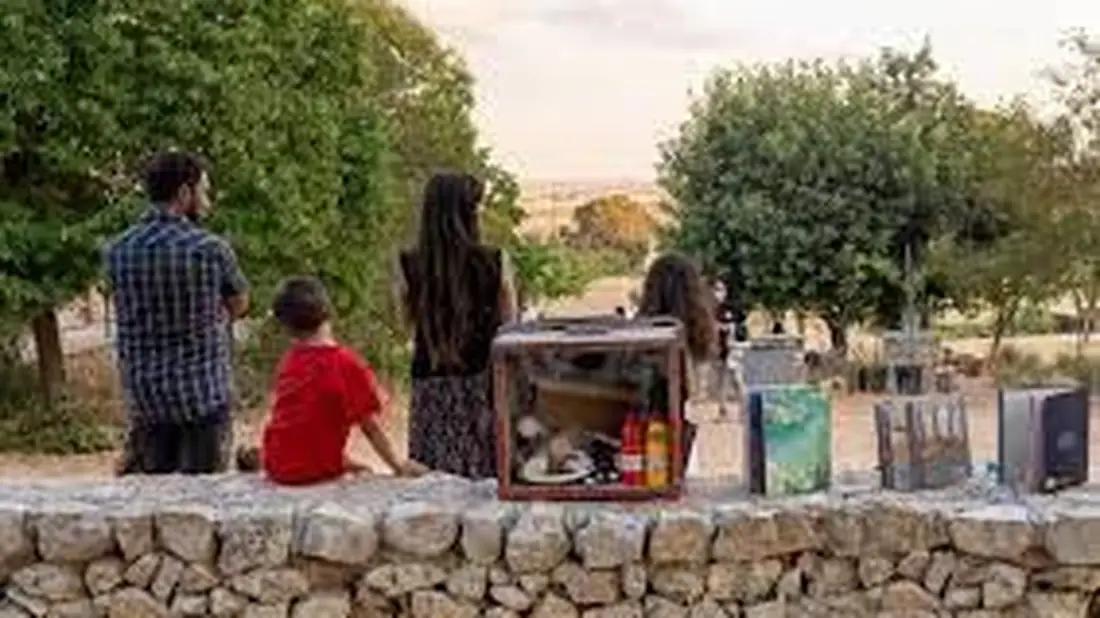
Visitors at a farm stall in Apulia. Photo: PoliRuralPlus pilot materials (RP4), poliruralplus.eu
| Territory | Apulia region |
| Partner | TINADA, TIN (lead; the only partner) |
| Theme | Short food supply chains and connected rural services |
| RAP | Apulia SFSC RAP, targets to 2028 |
| Open calls | Outreach: DEMO (Cluster Srl). Mobilise: INCO. Develop: Field2Fork AI Hub (EXO with the Regional Agri-Food District) |
The challenge
The pilot wants to strengthen farming by linking it to services that make rural life viable: short supply chains, social and educational farms, educational forests, agritourism. It must engage young people, improve digitisation and skills, and tie research to practice. The DEMO focus groups found strong producer awareness of short chains, but also fragmented supply, weak cooperation, logistics and communication costs, little training and low awareness of regional policies.
What the plan sets out
By 2028 the RAP targets 30 % more agri-food volume through SFSCs, 20 % lower logistics-related greenhouse-gas emissions and 15 % more jobs in ICT, advisory services, food production and marketing linked to SFSCs. The brief recommends:
- an Apulia SFSC Innovation Hub, a one-stop advisory centre;
- AKIS funding for advisers and certification in digital and sustainable agriculture;
- higher annual SFSC spending, co-financed by EAFRD, the national Recovery and Resilience Plan and private capital;
- SFSC measures in the Smart Specialisation Strategy;
- capacity building for 500 young farmers and women entrepreneurs;
- a single digital permitting window, and a regional law on sustainable food systems.
Tools, open calls and status
The open calls built up in steps. INCO (Mobilise) formed a network of experts, producers and consumers to explore SFSC business models, including AI-based solutions. Field2Fork AI Hub (Develop) is building a “Personal Farmer” chatbot that reads natural-language dietary and ethical preferences and proposes several personalised shopping carts from small and medium producers across Puglia.
The pilot reports that it mapped policies and funding for short chains, flagged gaps in advisory services and regional strategy, and discussed results with regional authorities. It also tested JackDaw for access to territorial information. The hub and the regional law remain proposals; D7.4 lists a “Made in Apulia” food brand among the expected results.
Related
- Builds on: The network of nine pilots
Sources
- D7.3 Policy Brief No. 1, Annex 4 "Enhancing Short Food Supply Chains in Puglia (Apulia), Italy". PDF
- D5.1 Prepared pilot by Stakeholder Multi-Actor Approach, §2.4 "Apulia, Italy". PDF
- D7.4 Exploitation plans and business models, edition 1, §3 Table 10 and Annex A §5 "Italy – Apulia Region". PDF
- D6.3 Comprehensive Report on Funded Activities and Impact Assessment (DEMO, INCO, Field2Fork AI Hub). PDF
- PoliRural+ website, pilot page "Italy – Apulia" (2024 and 2026 texts). poliruralplus.eu